Chinese Medicine
Train in Harmony With Your Body
Living Kung Fu is guided by the principles of Traditional Chinese Medicine —
a system that understands how the body moves, breathes, and sustains energy over time.
This is not about pushing harder.
It is about training with intelligence, precision, and respect for the body.
Build strength
without strain.
Develop energy without depletion.
Cultivate a body that remains resilient for years to come.
A DIFFERENT WAY OF UNDERSTANDING THE BODY
Most people are taught to see the body in parts — muscles, joints, isolated systems.
Traditional Chinese Medicine takes a fundamentally different view.
It sees the body as an intelligent, interconnected system — where movement, breath, circulation, and internal balance are inseparable.
In this understanding, true health is not forced.
It is cultivated through alignment.
- Posture that supports natural structure.
- Breathing that fuels energy.
- Circulation that keeps the system alive and responsive.
- A rhythm between activity and recovery.
- Emotional balance that does not disrupt the body.
- A daily flow that sustains long-term vitality.
When these elements are in harmony,
the body performs effortlessly.
When they are not, fatigue, tension,
and imbalance begin to surface.
This is where training becomes something more.
Not just effort.
Not just discipline
But a process of returning the body to its natural state of balance, strength, and flow.
THE POWER OF BREATH
In Daoist understanding, breath is more than a biological function.
It is the bridge between body, mind, and energy — the invisible force that regulates how we feel, move, and live.
Traditional Chinese Medicine has long recognized what modern life often ignores:
The way you breathe shapes the state of your entire system.
When breath is shallow and unconscious, the body contracts.
- Energy becomes stagnant.
- The mind becomes restless.
But when breath is guided with awareness, everything begins to shift.
- Energy flows.
- The nervous system settles.
- The body restores itself naturally.
Breathing influences not only oxygen intake, but circulation, emotional balance, focus, and recovery.

It is the foundation beneath endurance.

The quiet regulator of stress.

The source of internal stability.
This is why, in traditional training, breath is never treated as an accessory.

It is trained through stillness.

Refined through slow, deliberate movement.

Cultivated until it becomes deep, efficient, and effortless.
Because when breath is aligned, the body follows.
And when the body is aligned, the mind becomes clear.
Breath is not just something you do.
It is something you learn to master —
and in doing so, you begin to master your state.
Movement as Circulation, Circulation as Life
In Daoist understanding, life is movement.
The body is not designed to remain still for long periods —
it is designed for continuous, intelligent flow.
Traditional Chinese Medicine teaches that health depends on the smooth circulation of energy and blood throughout the body.
When movement is limited and posture collapses, this flow is disrupted.
Energy becomes stagnant.
Circulation weakens.
The body grows heavy, stiff, and fatigued.
But when movement is restored with awareness, the system begins to come alive again.
Not through force —
but through precision, rhythm, and continuity.
- Standing practices develop structure and internal alignment.
- Slow, controlled movements refine coordination and awareness.
- Stepping patterns reconnect the body as one integrated system.
- Stretching and mobility release restriction and restore openness.
- Forms practice unifies breath, movement, and intention.
Over time, these practices do something profound.
They don’t just train the body — they recondition how energy flows through it.
Circulation improves.
Tension dissolves.
The body becomes lighter, more responsive, more alive.
In this way, movement is no longer just exercise.
It becomes a daily practice of restoring balance, maintaining health, and sustaining vitality over time.
The Intelligence of Balance
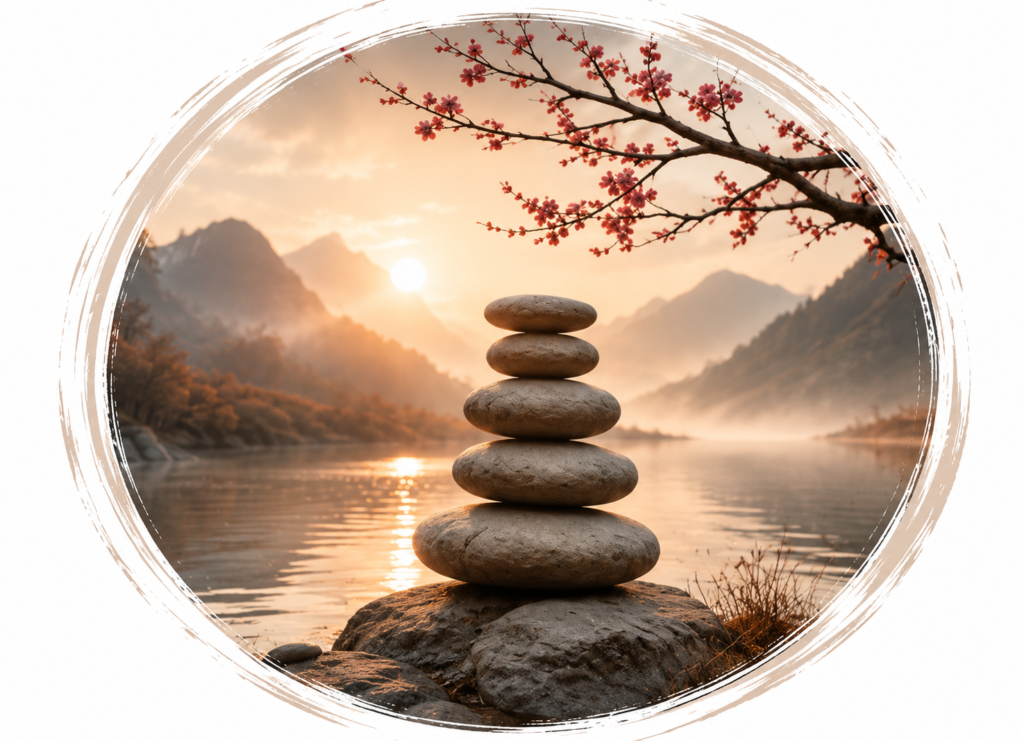
In Daoist philosophy, health is not found in extremes.
It is found in balance — the dynamic harmony between effort and ease, movement and stillness, action and recovery.
Traditional Chinese Medicine teaches that the body thrives not when pushed to its limits,
but when it is guided within its natural rhythm.
Yet modern life pulls most people into an imbalance
Too much sitting, followed by sudden intensity.
Too much mental strain, followed by insufficient rest.
Too much stimulation, and too little true recovery.
Over time, this creates a system that is constantly depleted — even when it appears active.
True training follows a different principle
It integrates effort with recovery.
Movement with breath.
Discipline with restoration.
Strength is developed, but not at the cost of the system.
Energy is built, not consumed.
Progress is made, without creating exhaustion.
Because in the end, true vitality is not created by doing more. It is created by learning when to act, and when to restore — and allowing both to work together in harmony.
This includes:
- Intentional effort that challenges the body
- Deep recovery that restores it
- Breathing that regulates the system
- Sleep that rebuilds energy
- Mobility and stretching that maintain openness
- Calm practices that stabilize the mind
When this balance is respected, the body begins to respond differently.
- It becomes stronger — without tension.
- More capable — without fatigue.
- More resilient — without burnout.
The Body Reflects the Mind
Stability gives you structure. Energy gives you life.
They are expressed through it.
Stress is not just something you feel — it is something the body carries.

Your body becomes strong—yet relaxed.

It tightens your posture

It disrupts your sleep

It unsettles your internal balance
Over time, unregulated emotional tension begins to shape the way the body moves, functions, and recovers.
But the same system that holds stress also holds the capacity to release it.


Through the right kind of training,
the body can be guided back into regulation.
Breathing practices calm and stabilize the nervous system
Slow, deliberate movement releases accumulated tension
Standing practice builds internal structure and grounding
Meditation restores clarity and emotional balance
A consistent rhythm re-establishes stability within the system.
These are not separate techniques.
They are part of a unified process —
one that allows the body to reset, recover, and return to equilibrium.
For many, training becomes more than physical development.
It becomes a way to process stress, cultivate clarity, and maintain a steady internal state —
regardless of external demands.
Because when the body is regulated, the mind follows.
And when both are aligned, a deeper sense of balance naturally emerges.
Training in Harmony With Time
In Daoist understanding, the body does not exist in isolation.
It moves with cycles —
of day and night, of seasons, of expansion and rest.
Traditional Chinese Medicine recognizes that energy is not constant.
It rises, peaks, and recedes in natural rhythms.
Health is not created by resisting these cycles —
but by aligning with them.
Yet modern life often ignores this intelligence.
- We push when the body needs rest.
- We demand intensity when energy is low.
- We override the rhythms that are designed to sustain us.
Over time, this creates imbalance — and eventually, exhaustion.
True training follows a different path.
It adapts to the natural flow of the body.
- In the morning, practice is calm and centering — awakening breath and awareness.
- At midday, energy is expressed through more active and dynamic training.
- In the evening, the body returns inward — with stretching, slowing, and integration.
Across the seasons, this rhythm deepens.
- Winter invites internal work, structure, and foundation.
- Summer allows for expansion, intensity, and expression.
This is not random.
It is a system designed to preserve energy, prevent depletion, and sustain long-term vitality.
Because real mastery is not found in doing more.
It is found in doing what is needed —
at the right time, in the right way, in harmony with the body’s natural cycles.
HEALTH AS A LONG-TERM MASTERY
In both Daoist philosophy and Traditional Chinese Medicine, health is not something you fix.
It is something you cultivate.
Not through intensity.
Not through shortcuts.
But through consistent alignment with how the body is designed to function over time.
Modern culture often treats health as reactive —
something to restore only when it begins to decline.
But in deeper systems of understanding, health is proactive.
It is built daily, through the small decisions that shape the state of your body and energy.
This is where the principles of longevity — what modern thinkers might call juventology — begin to emerge.
A body that remains strong, adaptable, and resilient is not the result of occasional effort.
It is the result of rhythm, consistency, and intelligent practice.
Health is supported through:
- Movement that keeps the system alive and responsive
- Posture that aligns structure and reduces internal strain
- Breathing that sustains energy and regulates the nervous system
- Sleep that restores and rebuilds
- Training that challenges without depleting
- A daily rhythm that stabilizes internal processes
- The ability to regulate stress rather than accumulate it
- Time for recovery, allowing the body to integrate and adapt
Over time, these elements compound
- Energy becomes more stable.
- The body is more resilient.
- The mind is more clear.
Training, in this context, is no longer just about strength or skill.
It becomes a system for sustaining vitality, extending longevity, and preserving the quality of life over years — not just moments.
Because true health is not achieved in a single breakthrough.
It is built, quietly and powerfully, through what you do every day.
Train in a Way That Sustains Life
Most training systems are built for performance.
This one is built for juventology.
Rooted in Daoist principles and Traditional Chinese Medicine, this approach recognizes that true strength is not measured by how much you can push —
but by how well your body continues to function, adapt, and thrive over time.
It is a system designed to build without breaking,
to develop capability without creating hidden costs.
Here, training becomes more than physical effort.
It becomes a method of cultivating energy, preserving balance, and supporting the body’s natural intelligence —
so that strength, clarity, and vitality are not temporary peaks,
but qualities that remain.
Because in the end, the goal is not just to perform.
It is to sustain a body and mind that continues to evolve, adapt, and stay resilient for years to come.
How to Join
Begin Your Practice
If you feel ready to experience this way of training, you can begin here: